GUILDA Insights
Insights
How to secure Google Cloud and Kubernetes, meet compliance frameworks, learn from data breaches and manage supplier risk. Every article draws on GUILDA's practice and is written by its founder, Marco Villarruel.
Kubernetes and Containers
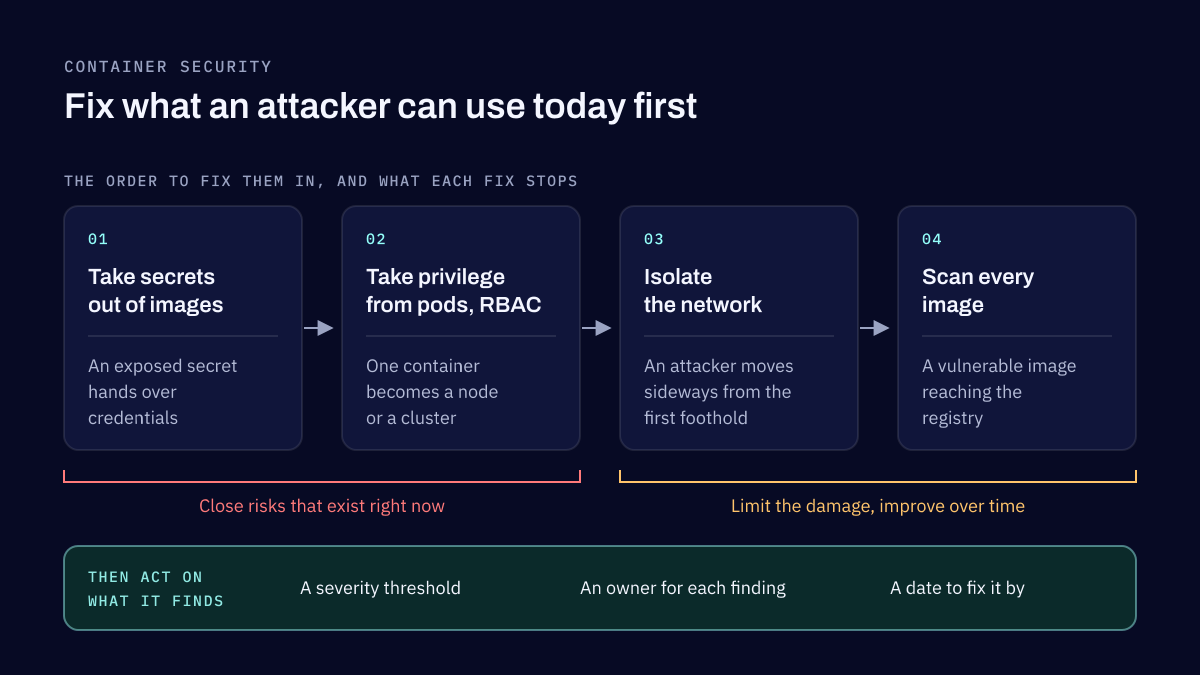
Container security best practices: what to fix first
The container weaknesses we find most often are ordinary mistakes, not exotic exploits. Fix them in order of risk. Take secrets out of images, take privilege away from pods and accounts, isolate workloads on the network, and scan every image automatically, then act on what the scanner finds.
Articles by topic
Business Continuity
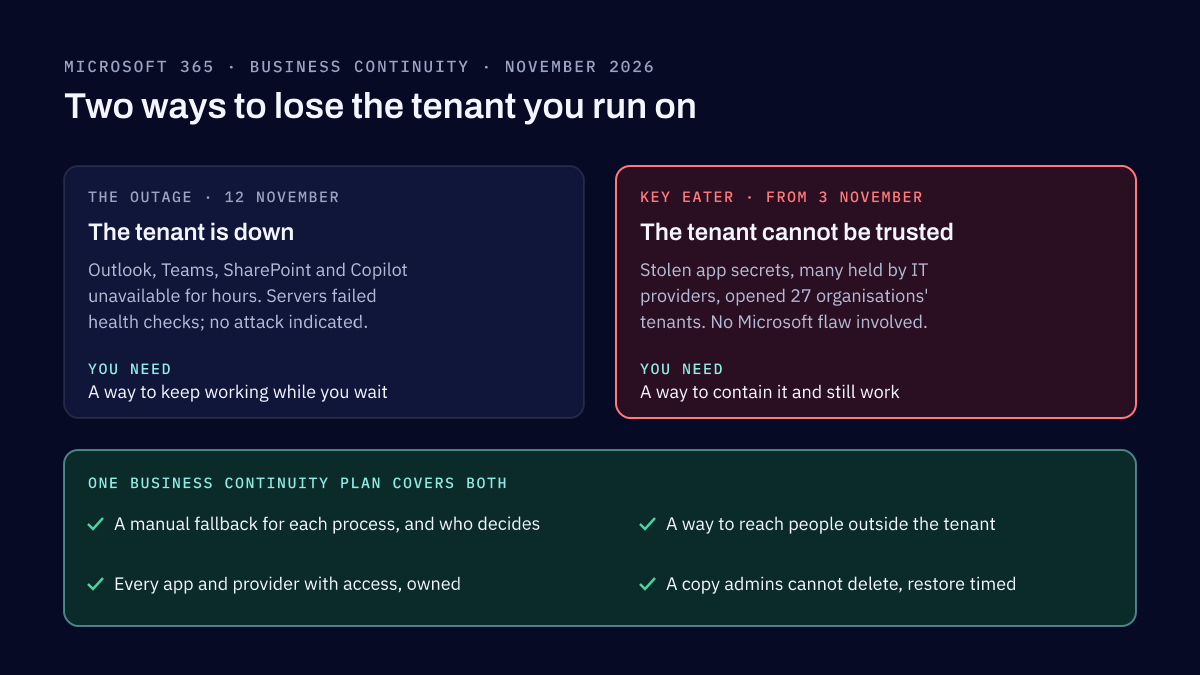
Microsoft 365 went down and Microsoft tenants were breached: can your business keep running?
On 12 November 2026 a Microsoft 365 outage cut companies off from Outlook, Teams and Copilot for hours. The same month, stolen app credentials opened 27 organisations' Microsoft tenants, many through their IT providers. Neither was a Microsoft hack, and both test the same business continuity plan.
Digital Transformation
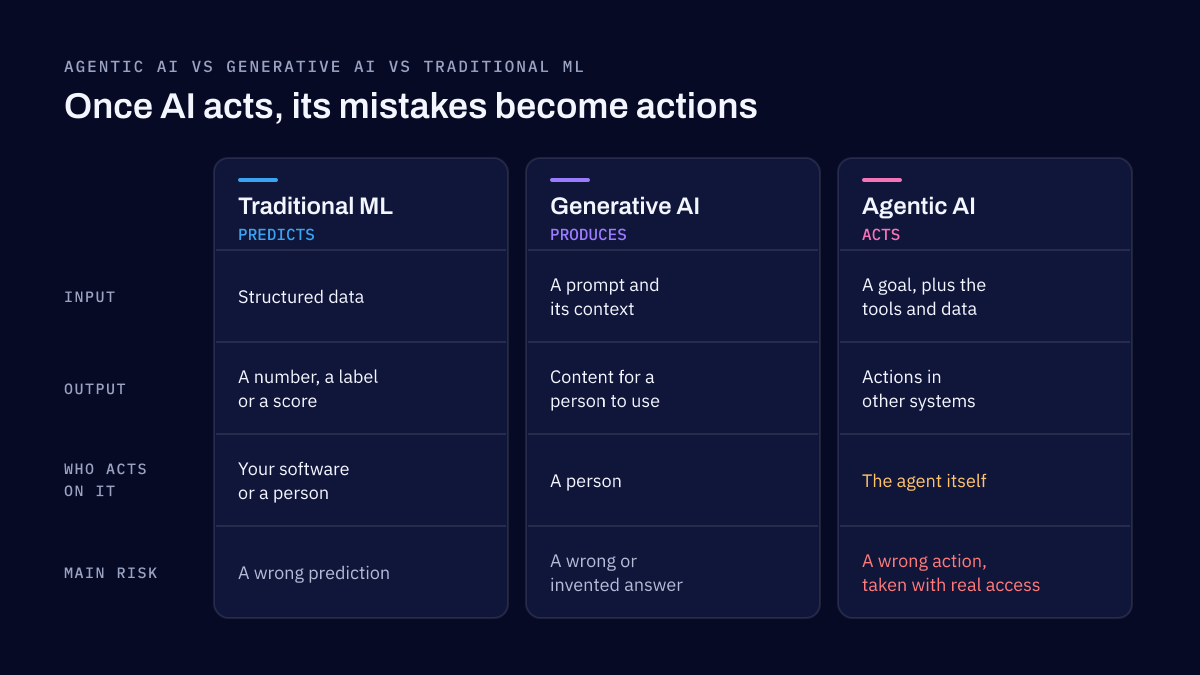
Agentic AI vs generative AI vs traditional ML: what changes when AI starts taking action
Traditional machine learning predicts, generative AI writes, and agentic AI acts. The difference decides what a project costs, what can go wrong and how much control it needs. Here is how to tell the three apart, with examples of each, and how to choose the one your project actually needs.
Digital Transformation
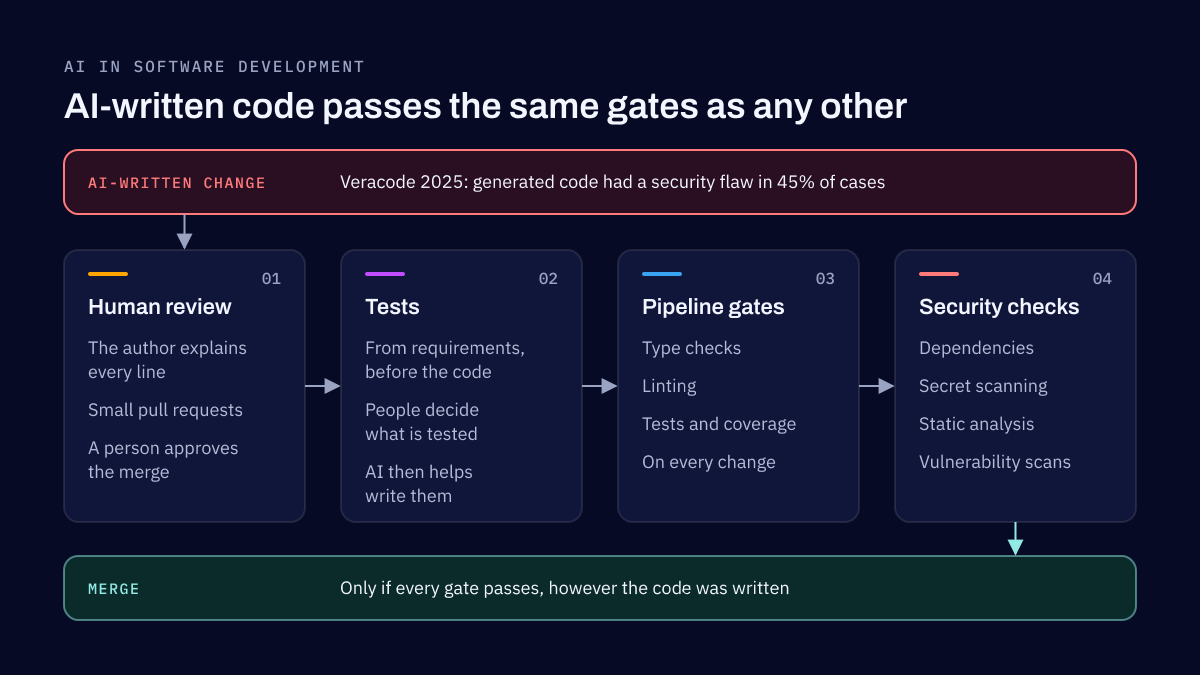
AI in software development: how QA changes in the age of vibe coding
AI assistants and agents now write, review and test code. They make code faster to write, not safer to ship. Four public incidents show what goes wrong, and what review, testing, security checks and governance have to look like when much of the code is written by AI.
Threat Detection
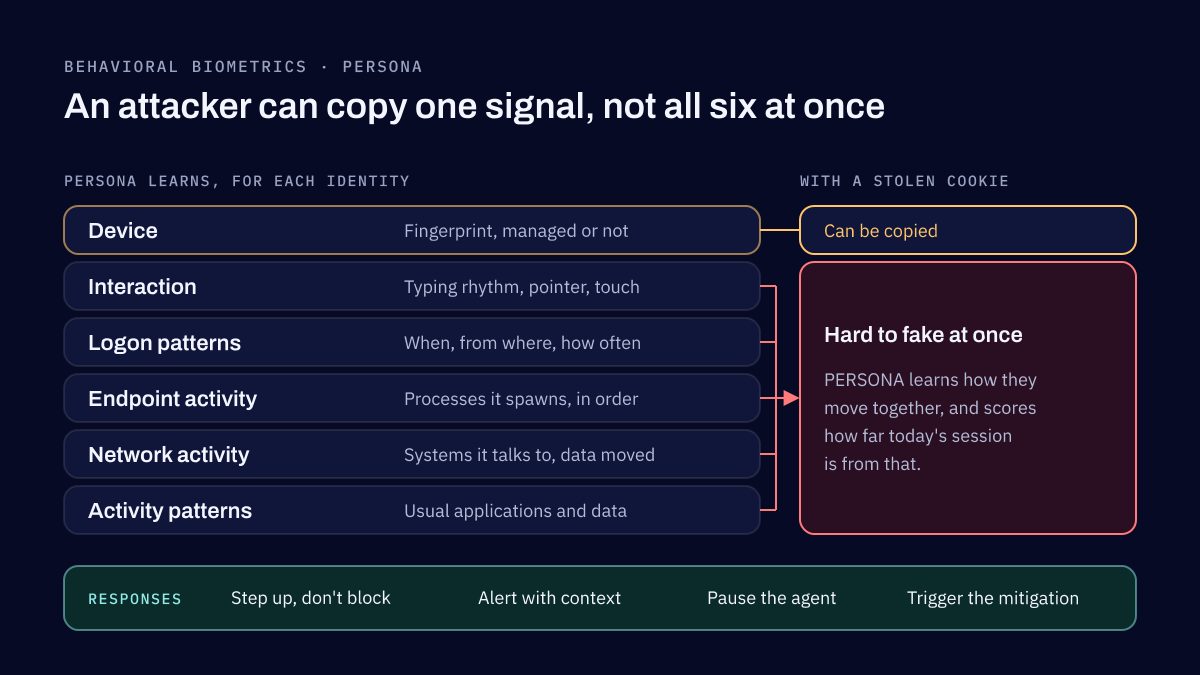
Behavioral biometrics with ML: PERSONA, a multimodal view of every user, device and AI agent
Behavioral biometrics identifies a user by how they act, not by what they know or carry. Combined with a device fingerprint and session context, and built with machine learning, it gives a profile that shows when an account, a device or an AI agent stops behaving like itself. PERSONA is our name for that profile.
Threat Detection
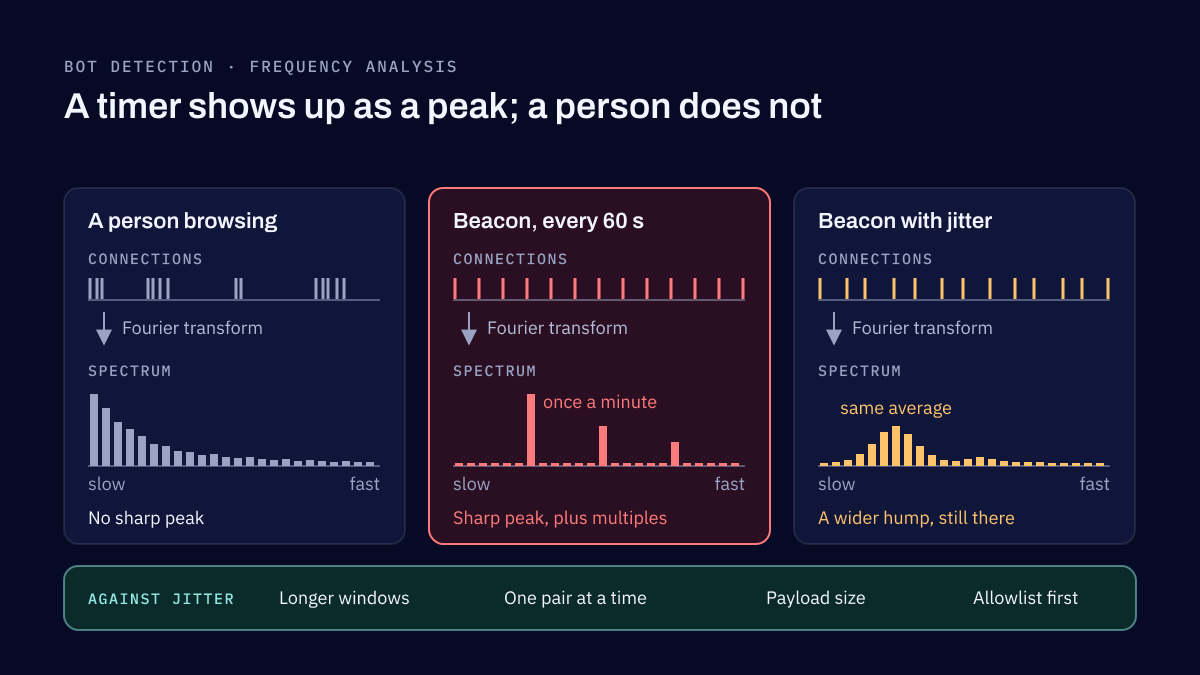
Bot detection by rhythm: how Fourier transforms and frequency analysis expose bots
Most bot detection judges each request on its own, so a patient bot gets through. Scripts and malware keep time, and people do not. This article explains how a Fourier transform turns that timing into a visible peak, how jitter tries to hide it, and where rhythm fits beside the other signals.
Threat Detection
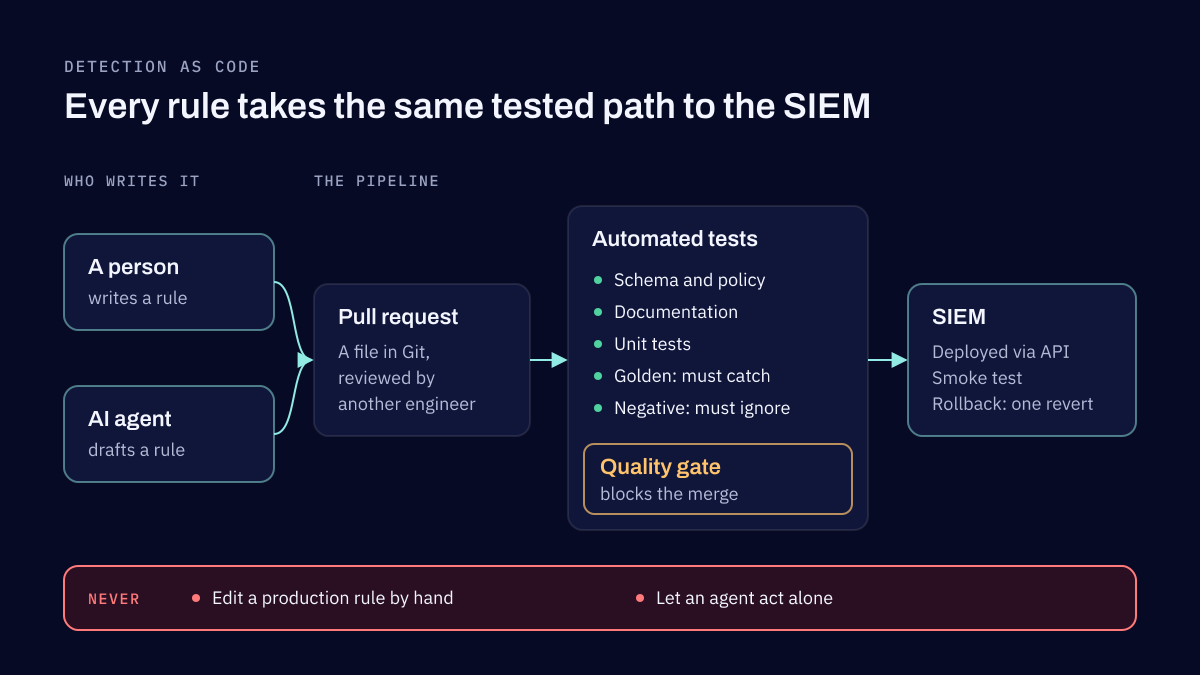
Detection as code in the agentic era: CI/CD strategies for detection engineering teams
Detection as code is managing detection rules the way developers manage software. Rules live in version control, are written in a portable format such as Sigma, are reviewed through pull requests, are tested automatically in a CI/CD pipeline and reach the SIEM only through that pipeline.
Identity and Access
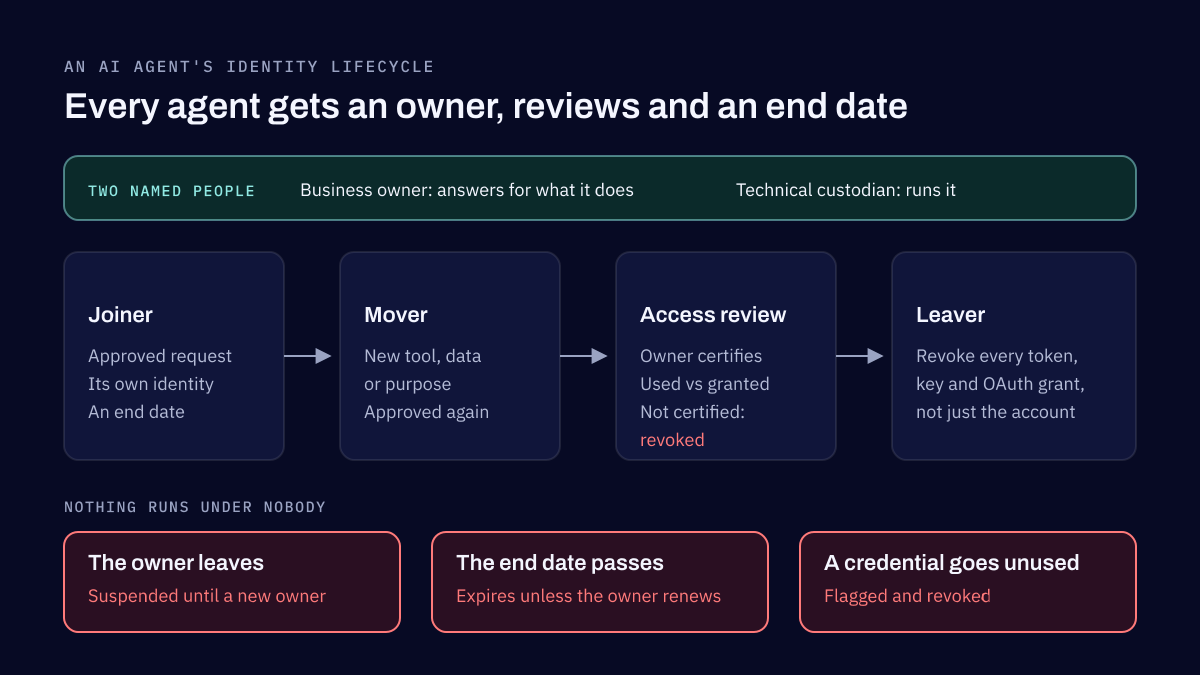
Identity governance and administration for AI agents: reviews, lifecycle, least privilege
Identity governance and administration decides who should have access to what, keeps that access right as people join, move and leave, and proves it with reviews. AI agents are the newest identities it has to govern. Each needs an owner, a joiner, mover and leaver process, access reviews and an end date, like any other account.
Threat Detection
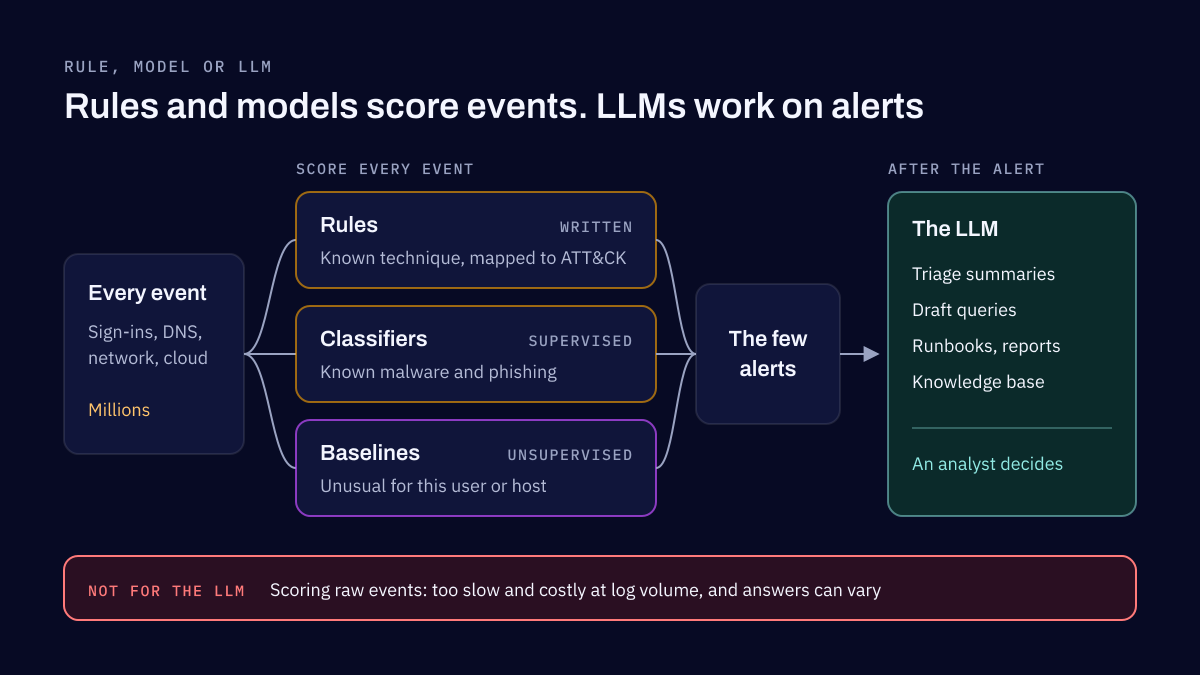
Machine learning in cybersecurity: why traditional ML still does the heavy lifting
Machine learning in cybersecurity means models that learn from data either what an attack looks like or what normal looks like, and flag what matches the first or breaks the second. These traditional models run on every event inside your EDR, email security and SIEM. LLMs help after the alert, not before it.
Tell us what you need to secure or build
Send a short description of the problem. We reply within two business days.