Insights
Kubernetes and Containers
4 articles
Articles by topic
Kubernetes and Containers
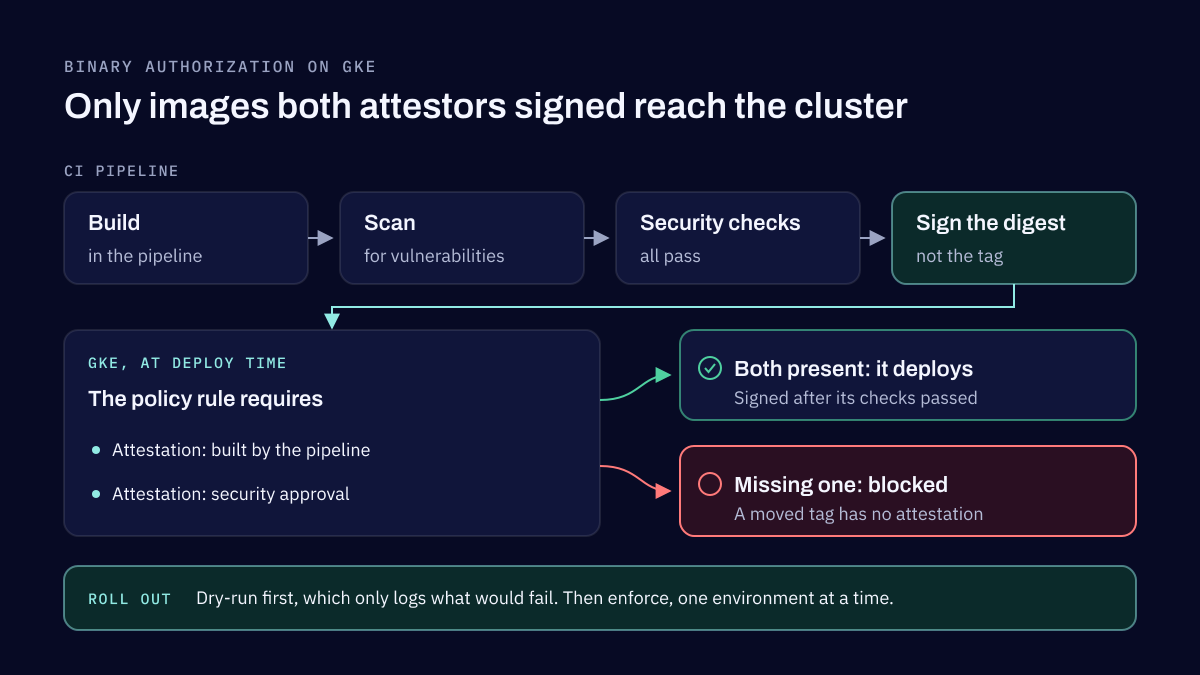
Binary Authorization on GKE: a rollout that does not block deployments
Binary Authorization makes GKE check every container image against a policy before it deploys, and lets only images signed by the attestors you trust run. Roll it out in dry-run mode first, sign image digests in CI after the build and the scan pass, and keep exemptions and break-glass for real emergencies.
Kubernetes and Containers
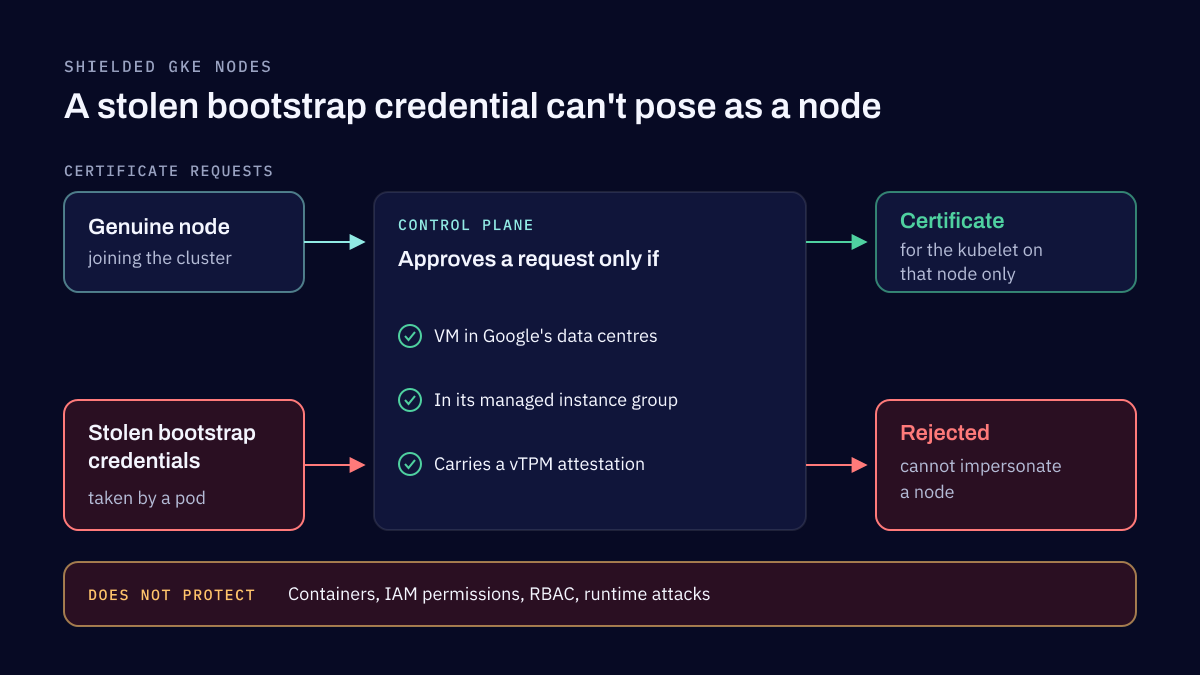
Shielded GKE Nodes: what they protect and what they do not
Shielded GKE Nodes prove to the control plane that each node is a genuine VM of your cluster, so an attacker who steals a node's bootstrap credentials cannot impersonate it. Secure Boot and integrity monitoring add checks on how the node started. They protect the node, not the workloads running on it.
Kubernetes and Containers
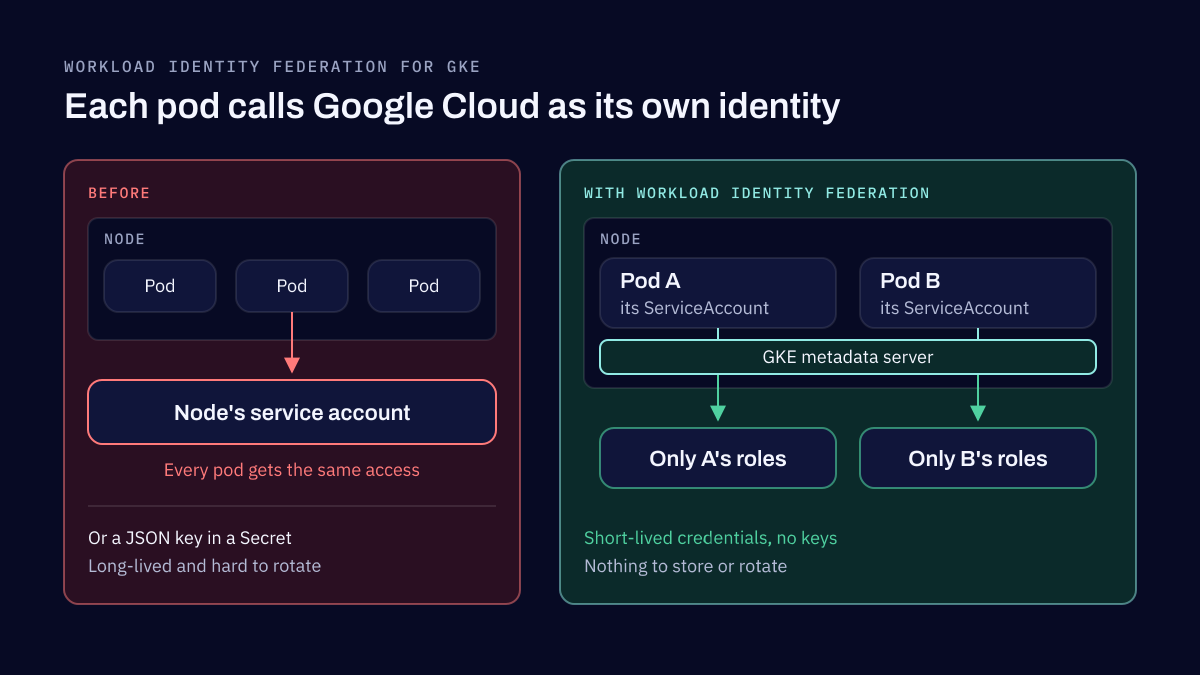
Workload Identity Federation for GKE: access without keys
Workload Identity Federation for GKE lets a Kubernetes workload call Google Cloud APIs as its own identity, with short-lived credentials and no service account key to store or rotate. It removes a whole class of leaked credentials, but only if each workload gets its own identity and only the access it needs.
Kubernetes and Containers
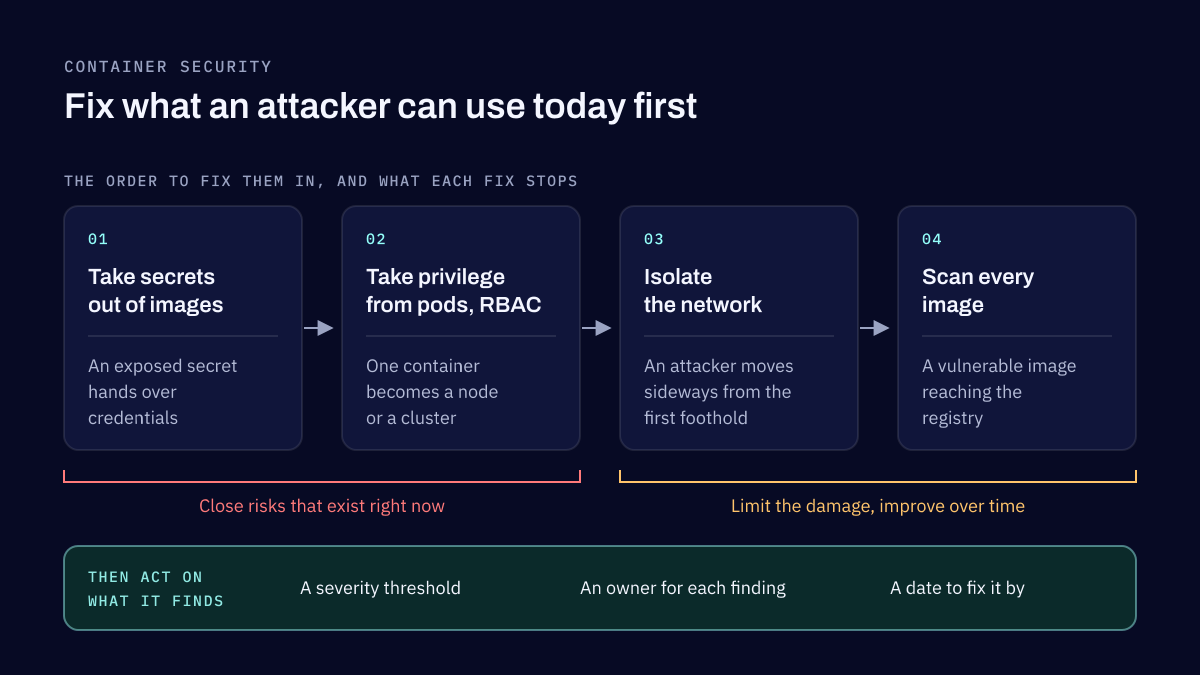
Container security best practices: what to fix first
The container weaknesses we find most often are ordinary mistakes, not exotic exploits. Fix them in order of risk. Take secrets out of images, take privilege away from pods and accounts, isolate workloads on the network, and scan every image automatically, then act on what the scanner finds.
Tell us what you need to secure or build
Send a short description of the problem. We reply within two business days.